

monster
Film, 2003, 4 stars
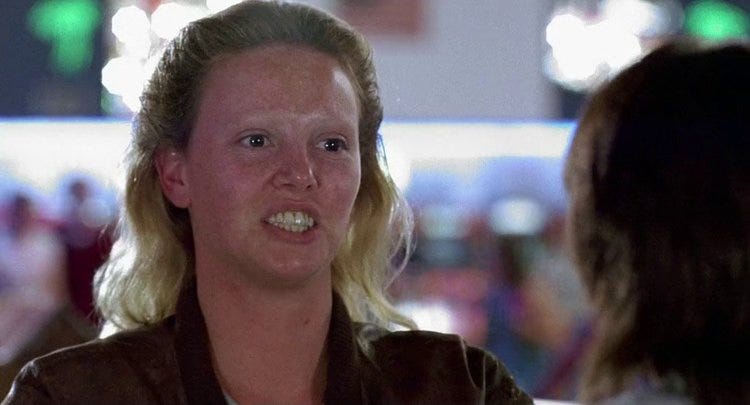
Written and Directed: Patty Jenkins
If the numerous re-enactments of her crimes are even halfway close to the truth, then there is little doubt Aileen Wuornos was indeed a monster. Even if, as she claims, her first kill was in self defence, her subsequent killing spree erases all pity we might have felt. That she did it all for love, or the lack of it as this film suggests, is just appalling, and there's no excuse. Thankfully it is never offered as one. There is no doubt as to what happened and how, all this film can attempt to do is to illuminate why.
Within the bounds that the filmmakers have so obviously set for themselves, they are extraordinarily successful. I was in turns disgusted, moved and enthralled. I couldn't keep my eyes off this creature, as much as I so desperately wanted to look away. Truly, Charlize Theron has given one of the great performances.
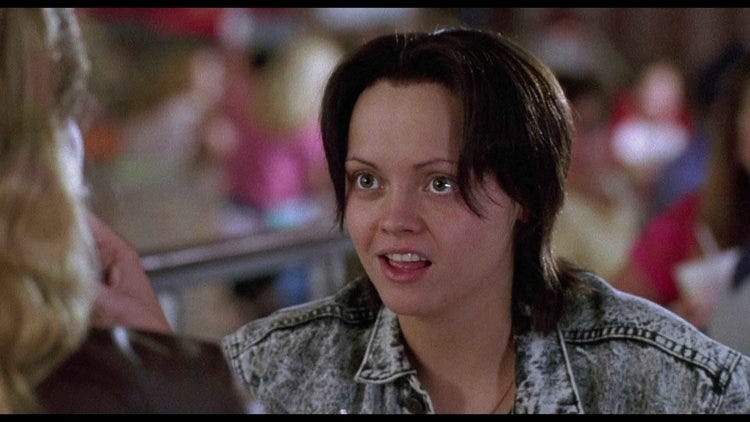
It wasn't just about weight gain or ugliness or facial prosthetics. This was a true transformation. There wasn't any of Theron left on that screen. It was all character. I'm saying this just to get that aspect of it out of the way. She was amazing and deserved every accolade. I do think Christina Ricci was robbed of a supporting actress nomination - her spontaneous performance is wonderful - but none of the praise heaped on Theron is at all exaggerated.
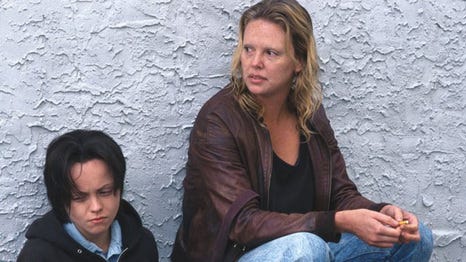
What interested me most about Monster was the time spent exploring how the love between Lee and Selby develops and grows - the mutual alienation that so quickly becomes obsession. They could have chosen to put more of the focus on Aileen the killer, rather than Aileen the person. That's what separates this from your average serial killer movie. The filmmakers seem to instinctively understand the audience's need to know why Selby Wall was attracted to Lee, why she stayed, and the devastation she felt when finally forced to leave.
I'm sure that in the end Aileen probably did not see Selby's actions or her testimony as a betrayal. It was a necessity. I think I was shocked most of all by how intimate and (yes, I'm going to say it) sexy their interactions were. I was not expecting a love story with this much power. Their relationship was driven by the most base emotions: loneliness, lust, anger, jealousy, desperation. There was a pure need between them that we can't help responding to.
When she first met Wournos, Selby Wall was young, stupid and desperately seeking unconditional acceptance of her fledgling gay identity. She's been tossed from one family member to another, suffering under a hammering of religious lecturing and threats of abondonment. Wuornos came from a harrowing background, almost to the point of torture.
If there were any doubts that the film would lay the bulk of the blame for Wuornos's pathology on her twisted childhood they are quickly dispelled. Of course, there is an element of social responsibility. Liberal-minded people have long since come to the agreement that most psychopaths are made, not born, through systematic abuse. Certainly there may be examples of people being evil from the womb, but the film posits that this was not the case with Wuornos. She, and her evil, were the product of her environment.
Theron obviously feels empathy and charity for Wuornos. We feel that through Wuornos's last ditch attempts at a legitimate life, through her death spiral, right down to the horrifying execution of the man who tries to help but must inevitably be sacrificed because he is a witness. We see it in the tremendous attention to detail: her nervous twitching, the way she touches her hair and her clothes, the way she shakes back her shoulders with misplaced dignity and pride. Wuornos is not being objectified by this portrayal, she's being inhabited. It's freakish.
I followed the love story through to its grisly conclusion, and left shaking my head. On the one hand I know this story is based on truth and in a sense needed to be told, but on the other hand I can't help despairing that once more we see lesbian passion onscreen as something to be feared and loathed.
To its credit, the film does try to distance itself from attributing any of the blame for Wuornos's violence on her love for another woman. Selby's religious family is presented for exactly that purpose, to show the film's disdain for homophobia. It is made clear that it was the mixture of their personalities, not their genders, that was the lethal combination.
The problem is, what effect does it have on all those people who are already predisposed to thinking of murder and homosexuality as moral crimes on par with each other? I don’t have an answer. There’s no doubt, however, that as a porttrait of obsessive love, this film is a masterclass. Don’t tell me women can’t direct, Patty Jenkins (who would go on to direct the blockbuster Wonder Woman) has talent in spades. It’s a pity the Oscars chose to ignore it.